// Story
Ontario, Canada — The Beginning
Raised by independent thinkers.
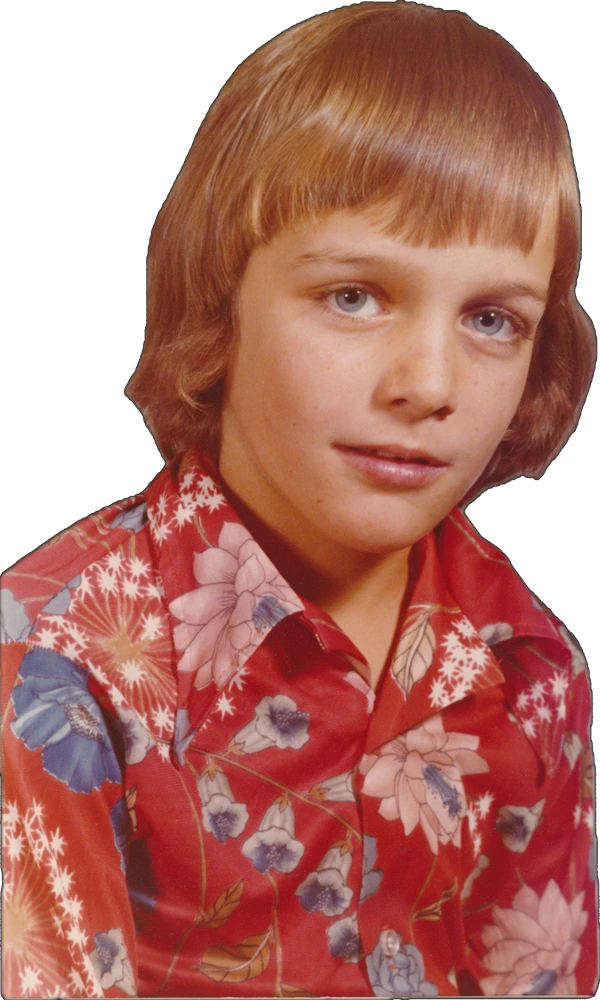
Grew up in Ontario, raised by community builders and independent thinkers. Early wins in math and accounting competitions. Extensive electrical work. Restoration of pioneer log homes. Outdoors camps, swim team. A foundation built on making things work, not just understanding why they do.
Queen's University at Kingston — 1984–1988
B.Sc. Electrical Engineering (Computer)
1st-year Class President of Science '88. Four years on the Engineering Society Council, finishing as VP of Society Affairs. Founded Science Quest — a summer camp for youth. Awarded the H.G. Conn Award for outstanding contribution to the Engineering Society. Elected permanent Class President of Science '88 — which means I organize the reunions. Fun.
Two summers at General Motors, Oshawa — part of the co-op education program. First summer: Paint Shop engineering, specializing in paint circulation systems. Second summer: quality control supervisor in the Body Plant, managing a team of quality inspectors overseeing welding robots.
GM was mid-transformation at the time — Japanese manufacturers had vaulted ahead on quality and the industry knew it. We were trained in quality circles, statistical process control (SPC), and related practices. Seeing that shift up close, at the production floor level, made quality a discipline rather than a department.
In third year, I received the Bell Canada Award, which came with a summer internship. That summer was spent building a database to cache special circuit lookups for early digital service circuits — a project known as Local Loop Lookup. Getting to know the last mile. Internet access engineering would later become a defining passion at Cisco Systems: connecting people and things to the internet, from the edge in.
Through these summers, I received what amounted to a co-op education alongside a top academic program. Theory and practice, running in parallel.
Toronto — Northern Telecom, 1988–1990
Systems Application Engineer
Northern Telecom was a world-class engineering organization. Our office north of Toronto alone had 300+ engineers performing disciplined project development for telecommunications customers. My client was exclusively Bell Canada, provisioning and expanding city telephone systems across the Golden Horseshoe — Toronto to Niagara Falls.
Also during this time: helped introduce the Macintosh personal computer onto engineers' desktops. Computing can be fun and flavourful.
The primary work was systems application engineering of the DMS-100 — the world's first fully digital telephone switching system. Developed skills and experience with ISDN, SS7 digital out-of-band signaling, and Subscriber Loop Carriers (SLC) — extending the reach of the digital central office into the last mile.
Achieved my Professional Engineer (P.Eng.) license in Ontario — still active.
— 1990 · Austin, Texas · In search of cultural variety and live music.
United Services Automobile Association (USAA) — San Antonio, 1991–1992
On-Site Telephony Engineer
USAA operated the world's largest call center. On-site engineer supporting the SL-100 — a DMS-100 city-class switch with a business software load. Exposure to very large business operations.
Apple Computer — Austin, Texas, 1992–1994
Info Systems & Telecom (IS&T)
In 1992, Apple Computer opened a customer support centre in Austin and I was hired to join the IS&T team. Great experience across a wide variety of networking, telecom, and servers.
Direct Response Centre (DRC)
Senior support for all Apple Networking and Communications products, working alongside the Software Development team. An extraordinary group of people doing extraordinary work.
Supported the Apple Server — Apple's first shift to a Unix-based operating system, the foundation everything Apple runs on today. Front-line support during one of the company's most significant architectural transitions.
Active participant in the early internet: WAIS, Gopher, and the tools of the moment. One day NCSA Mosaic showed up. Everything changed.
The Cupertino rotation produced contacts at Cisco Systems. Before long, packing up and driving to California.
Cisco Systems — Three Rotations, 1994–2008
Where the internet was being built.
Three separate engagements with Cisco over fourteen years, with intentional breaks between — a personal practice I am proud of and encourage in others. Cisco kept calling back. The work was worth returning for.
Technical Assistance Center — Mountain View & San Jose, 1994–1996
Joined before Cisco crossed $1B in annual sales, as they were moving to their giant San Jose campus. CERT2 — Customer Engineering Response Team: AppleTalk, DECNET, OSI. Collaboration, fault isolation, documentation, defect resolution. We had the ability to isolate and resolve issues in our monolithic codebase within a single day. Customer Success Engineering was our division — baked into everything we did, and a cornerstone of Cisco's success. Customers are not always right, but they always come first.
Promoted to the inaugural TAC Escalation Team — the best problem solvers in the building. Quickly identified that Cisco's Knowledge Management was in disarray. Customers were getting outdated, inaccurate content. Fixed it. Worked directly with the documentation team to rebuild the foundation.
Field Engineering — Austin, Texas, 1997–2001 (Freelance)
The Network Cowboy goes into the field. Freelance consulting for Cisco TAC, reporting to a Senior VP. Award-winning Case Studies and Design Guides. Founding member of the eSupport initiative, providing thought-leadership on Level 0 support — making the website and docs actually work so customers can self-serve before picking up the phone.
Major engagements in central Texas: Dell Computer, and a return to USAA — this time on the data side, providing technical leadership to the Cisco team and the customer as they extended the life of a massive Token Ring network while preparing for the transition to Ethernet. Built a small team in Austin, recruiting the best from the University of Texas.
Remote Operations Services — 2004–2008
Cisco acquired NetSolve. I was recruited back. Joined the team supporting Cisco CallManager (enterprise PBX). Arrived to find an absence of technical process. The first upgrade plan handed to me was on a Post-It note.
OuterNet — 2008–2010
A soft landing into independent engineering.
Joined OuterNet alongside a former Apple DRC teammate. Deeper project management and network engineering: complex routing, multi-phase system deployments, sustained engagements that required real ownership — not ticket-closing. The transition toward operating fully on my own.
Austin Voice Data LLC — 2010 to present
Basically, Kris Thompson.
Austin Voice Data is my company. The founding principle: own the right to pick and choose projects and customers. No layers. No dilution. Full accountability.
Sustained work with Texas State Agencies — DMV, TxDOT, ERS, TPWD, DPS. Voice, data, and IT security network infrastructure. Systems upgrades, new technology deployments, advanced technical support.
A business venture involving IoT-enabled exit signs introduced me to LoRaWAN — low-bandwidth, long-range wireless sensor networks. I fell in love with the data pipeline and what IoT makes possible: measuring and reporting on the physical world. It also gets you out of the office and into the field, which suits me fine.
Later joined Everynet — a global LoRaWAN network provider — as a Senior Systems Engineer to provide thought leadership, engineering discipline, and tools development. Built data pipelines for operational monitoring and a Django (Python) web application for field surveys, performance analysis, and empirical validation of RF coverage models. Replacing conjecture with measurement.